Douglas County's Writing Score Gains Followed the End of Shoe-Description Essays
A Colorado district abandoned shoe-description essays for a structured, research-backed approach, leading to improved writing scores that rippled into math and middle school.
By Brainova

Six-Year-Olds and a Blank Page
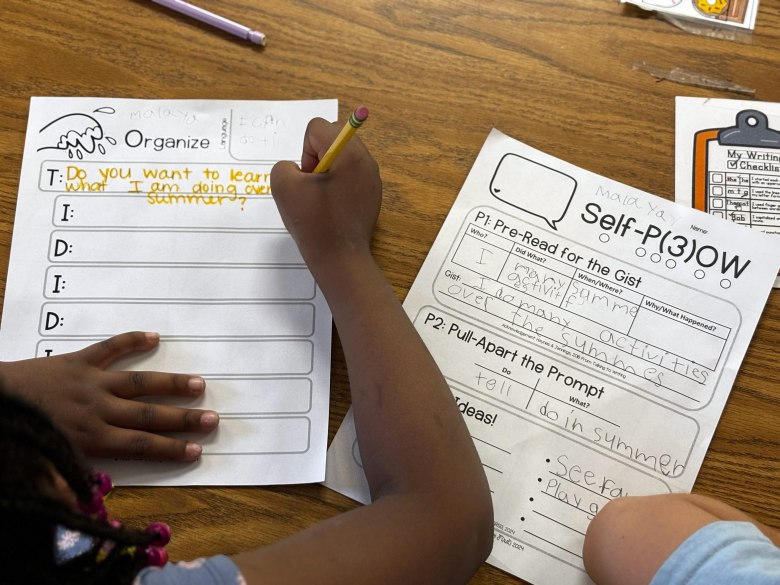
In Gabrielle Grace's first grade classroom at Sand Creek Elementary in suburban Denver, a boy named Dean finished his summer-plans worksheet before the bell. "I do many things over the summer," he wrote, listing "park, ipad and vacation." He was six. Grace said most of her students started the year unable to write a sentence. By spring they produced organized paragraphs on their own. Dean's confidence reflects what elementary teachers across the country say they rarely see — children who approach writing without dread. That dread is the norm: educators report students in upper elementary grades still lack the ability to write complete sentences, spell correctly, or punctuate. The national picture offers little clarity. The last nationwide standardized writing scores for elementary students came out in 2002, when 27 percent of fourth graders scored proficient or higher. No federal release has followed since.
The Numbers Nobody Agrees On
State-level data paints a bleaker picture than even pessimists expected. In spring 2025, more than half of Texas' 360,000 third graders earned zero credit on an essay prompt asking them to compare and contrast two texts. That same year in California, only 17 percent of third graders met the standard for organized writing on a research-skills essay. Florida students averaged 6 out of 12 possible points on the state writing exam. Vicki McQuitty, who directs the Maryland Writing Project and teaches elementary education at Towson University, said there is no reliable national metric to track elementary writing progress. "But the word on the street is that kids can't write," she said. Employers and college professors have echoed that complaint for years, pointing to graduates who arrive unable to construct a coherent multi-paragraph essay.
A District Ditches "Describe Your Shoe"
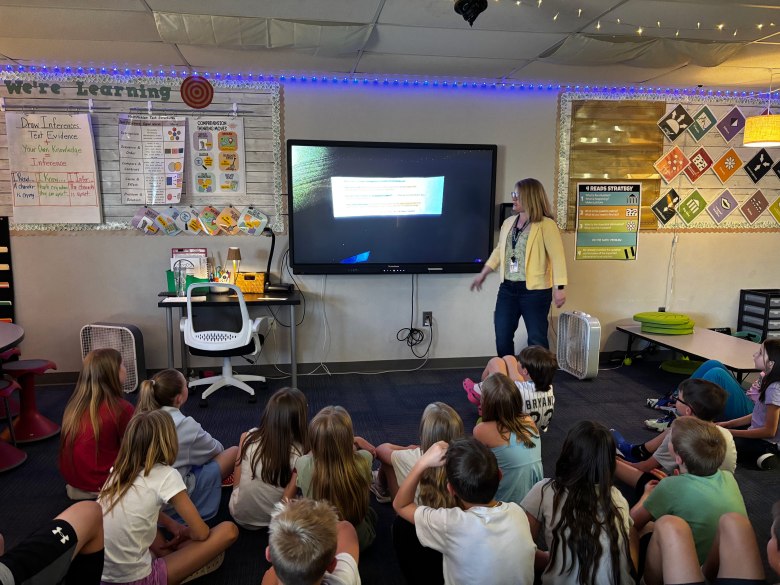
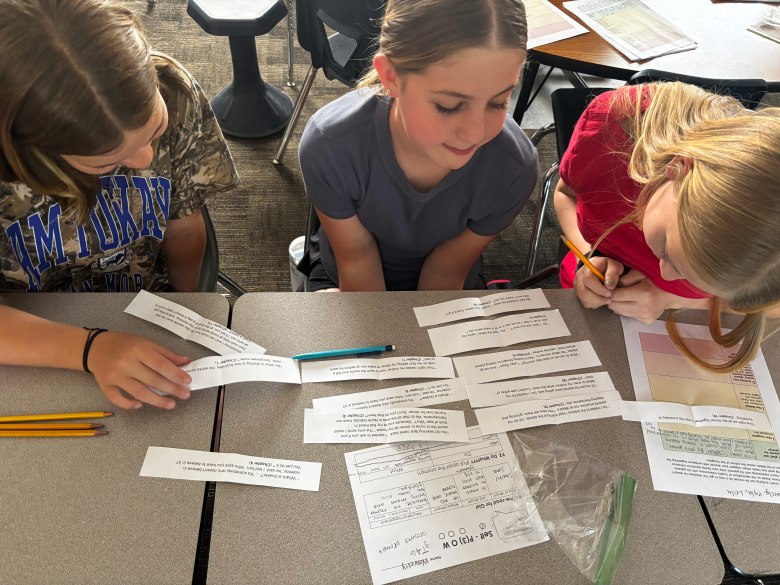
Douglas County, a 61,000-student district south of Denver, noticed in 2023 that its elementary writing scores on state tests lagged far behind reading scores. When administrators examined classroom practice, they found no common approach. Teachers pulled activities from sites like Teachers Pay Teachers and spent weeks on prompts such as "Describe your shoe" and "Describe your backpack." Janet Merrill, the district's literacy coordinator, called it "random writing." Merrill researched evidence-based methods and landed on Self-Regulated Strategy Development, a framework disability advocates in the district already supported. With help from a group called Releasing Writers, the district trained 100 coaches and teachers across more than 70 elementary schools. Three years on, every elementary teacher follows the same routine: analyzing model texts, responding to prompts using evidence, and relying on structured strategies with acronyms like TIDE — topic, important details, and ending. Students begin each writing session by composing a self-affirmation they can reread when stuck.
Kindergarteners Who Write Paragraphs
Kristin Allen, a kindergarten teacher at Sand Creek Elementary, recently guided a small group of five- and six-year-olds through a retelling of a story about animals making a gift for a turtle. After scribbling affirmations at the top of their pages — "I can do this," "I am smart" — the children wrote topic sentences and three supporting details. One girl produced "The anumls make a gift for turtle." Allen corrected spelling, monitored pencil grip, and reminded students to leave spaces between words. Allen, who taught kindergarten in New Jersey for a decade before returning to the classroom, said she had never seen young children produce full paragraphs before this year. She acknowledged that some veteran teachers resisted the structured approach, fearing it would strip the joy from writing. Merrill said she suspects students never loved the old process as much as their teachers assumed. "They saw this blank page and they just were like, 'I don't even know where to start,'" Merrill said.
Teachers Trained in Nothing
Writing instruction has long been the neglected discipline in teacher preparation. Adrea Truckenmiller, an associate professor at Michigan State University's college of education whose research centers on writing, said most teacher-education programs lack standalone writing courses. McQuitty from Towson confirmed the gap: "Even teacher educators do not always feel comfortable teaching preservice teachers about writing. It's always pushed to the back." Once in the classroom, pressure to raise reading and math scores on standardized tests leaves little room for anything else. Truckenmiller said she enters classrooms assuming writing instruction is happening, only to find it absent. Compounding the problem, children arrive with weaker fine motor skills than previous cohorts. Christina Bretz, an occupational therapist with Learning Without Tears, said she recently met a kindergartener who had never seen crayons and knew only how to color by swiping a finger on an iPad. The science of writing instruction, while less developed than the science of reading, does point to key practices: daily writing time, explicit teaching of handwriting and sentence construction, and structured planning tools.
Three Points, Then a Ripple
After the first year of implementation in pilot schools, Douglas County's state writing scores rose by 3 percentage points. Math scores climbed as well, which district officials attributed to students applying analytical skills learned through writing to problem-solving tasks. Teachers in higher grades began noticing that incoming middle schoolers carried stronger writing skills and asked what had changed in elementary classrooms. This summer, at the request of educators, Merrill and her colleagues will begin training all middle school teachers in SRSD. Federal research has found the approach improves writing quality across genres, grade levels, and assignment types, and that it serves as an effective intervention for students with learning disabilities. Yet awareness remains limited. Truckenmiller said the knowledge base is "concentrated in a really small number of people that hasn't been scaled yet." Schools often decide they must master reading instruction before turning to writing. Randy Barth, CEO of SRSD Online, which trains teachers in evidence-based writing methods, called writing "the last bastion of education" and said it receives the least funding of any core skill. Students in the district notice the shift. Connor Miles, a fourth grader at Prairie Crossing Elementary, said last year he felt "completely lost" when asked to write. His classmate Arya Melancon, 10, said the difference was stark when her grade sat for the spring state test: "Last year we were all scared of writing prompts. This year, we felt like we were ready."
Keep reading

Teaching
Dyscalculia is as common as dyslexia—but most districts can't spot it
A national scan finds up to 60% of affected students also have ADHD or dyslexia, yet only 1 in 5 teachers feel prepared, seven states lead on policy, and few districts have the specialists or referral systems to intervene.