U-shaped school funding and other research that defies education myths
A roundup of new studies and analysis on school spending, digital testing, teacher retention, merit pay, and more.
By Brainova

School funding is U-shaped, not skewed rich
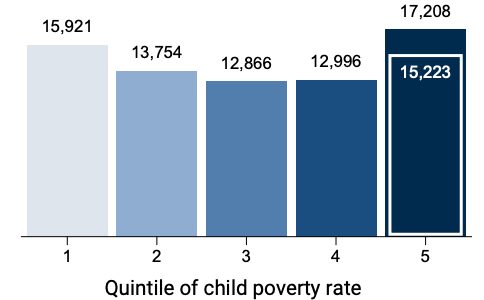
A Brookings Institution analysis finds that across the country, school funding is U-shaped: both high- and low-poverty districts spend more per student than those in the middle. The pattern holds even after adjusting for regional personnel costs. The white bar in the highest-poverty bucket shows spending without New York City, which skews the figure upward. This contradicts the long-held assumption that property taxes consistently underfund poor schools. The researchers agree high-poverty schools still need more money to serve students effectively.
The federal push for online testing
The federal government actively promoted digital testing during the Obama administration, says Joanne Weiss, who ran Race to the Top. The goals were to encourage classroom technology and improve assessment quality, with faster results and question types beyond multiple choice. Weiss notes that today's good assessments let students show what they know in various ways. Whether teachers and schools have realized those intended benefits remains an open question.
Obama's college message was more nuanced than 'college for all'
In his 2009 address to Congress, Barack Obama asked every American to commit to at least one year or more of higher education or career training, citing community college, four-year schools, vocational training, or apprenticeship. He repeated a similar message in 2015. The phrasing is more nuanced than the 'college for all' mindset that critics often attribute to that era, suggesting the policy debate may be arguing against a caricature.
Teacher turnover is down, but the cumulative loss lingers
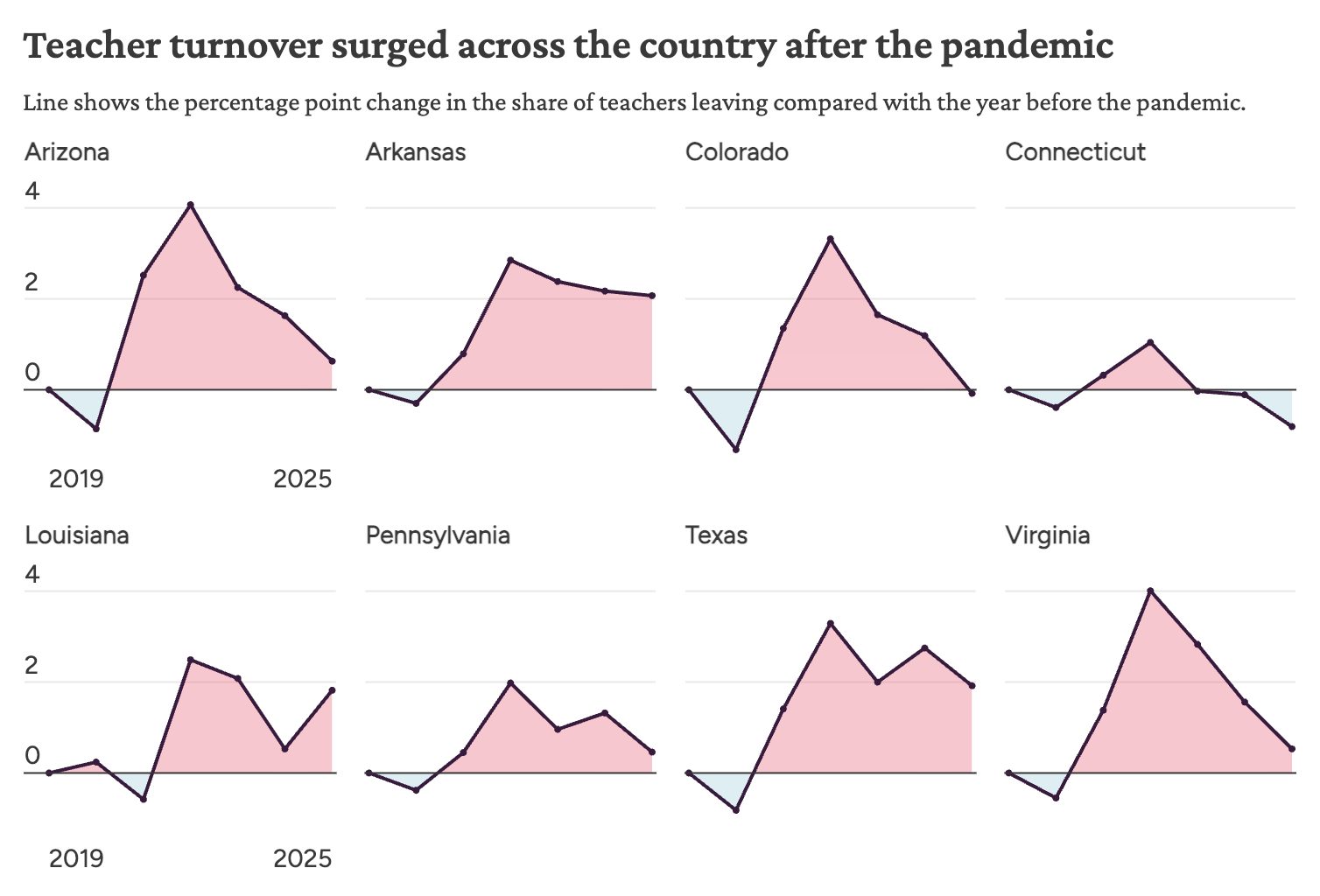
Teacher turnover rates are declining in most states, according to Chad Aldeman, who responded to my recent analysis. But the cumulative outflow of teachers and other school staff over the past four to five years may have destabilized schools in ways not fully appreciated. The decline in annual rates doesn't undo the accumulated loss of experienced staff, which could have ongoing effects on school climate and instruction.
Economists split on AI's impact on white-collar jobs
A Wall Street Journal survey of leading economists found them split on whether artificial intelligence will create or eliminate more white-collar jobs. In the Atlantic, Rogé Karma reached a similar conclusion, writing that if there's one lesson from the history of technology, it's that these changes are hard to predict. That calls into question the certainty behind calls for schools to prepare students for a specific future economy.
Merit pay benefits meet evaluation bias
Research on teacher merit pay in South Carolina and Texas points to benefits, but evaluation bias complicates performance-based pay. Teachers with higher-achieving and less disruptive students, holding constant the teacher and school, receive systematically higher performance ratings. Texas's merit pay system has encouraged some teachers to move to more-advantaged schools, potentially widening gaps.
In-state tuition for undocumented students boosts college completion
When states offer in-state tuition to undocumented students, college attendance and completion rates rise. The finding is relevant because the Trump administration and states such as Florida and Texas have moved to rescind those benefits. Without them, undocumented students are less likely to enroll or finish degrees.
COVID relief dollars sometimes just cut property taxes
School districts that received extra emergency COVID relief because of a quirk in the funding formula did not spend the dollars on students; instead, they appeared to reduce property tax rates. Unsurprisingly, there were no meaningful changes in student achievement. That outcome covers only a sliver of COVID funding in a small subset of relatively affluent districts, but it raises questions about whether federal aid reaches the classroom.