The Routine Behind Inclusion: A Shared Lesson Template, Six Co-Teaching Roles, and a Data Meeting Every Month
General and special education teachers can build inclusive classrooms through co-planned lessons, structured co-teaching models, and monthly data dialogues that hold the whole team accountable.
By Brainova

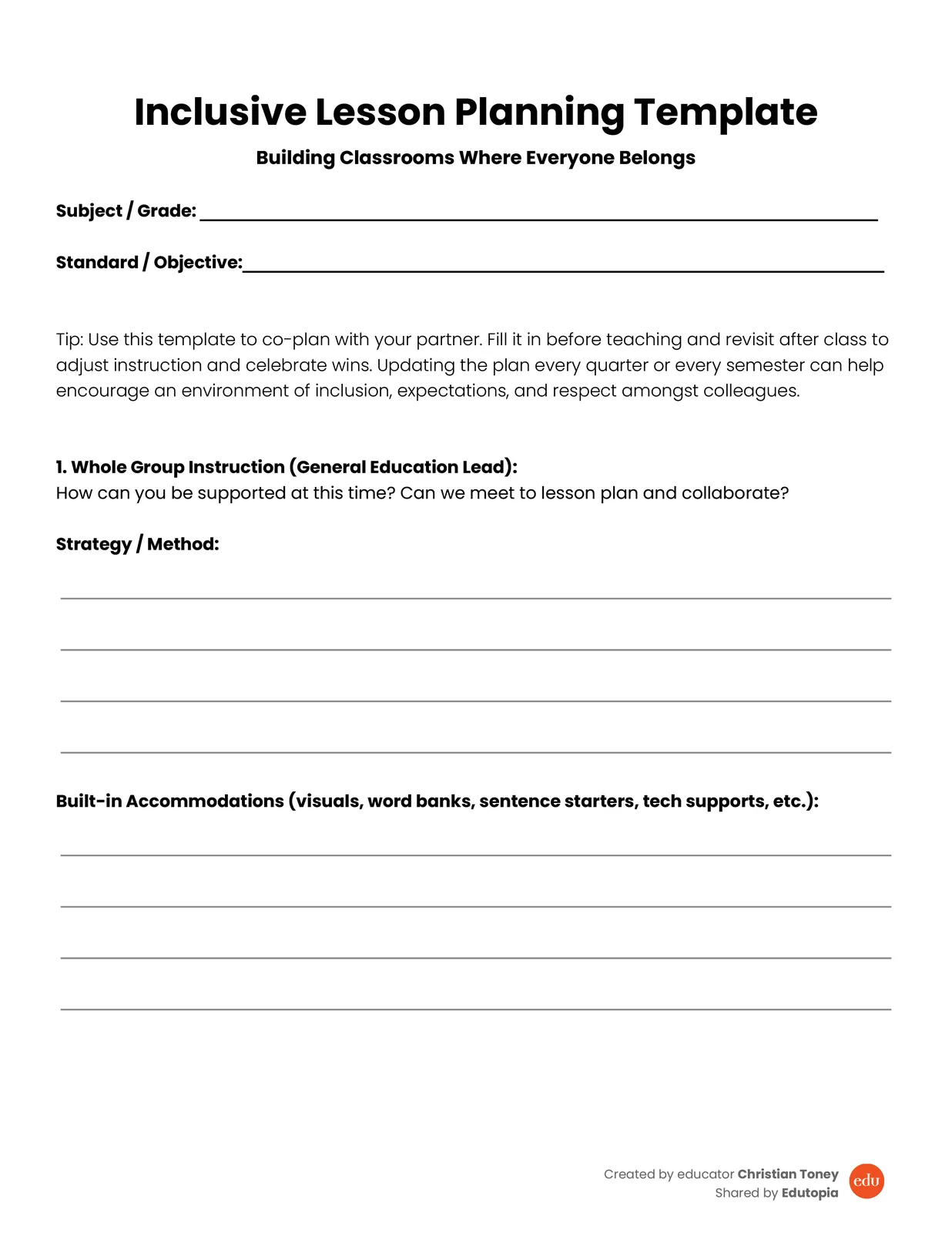
A Shared Template for Two Sets of Eyes
A fifth-grade reading lesson on theme becomes a joint blueprint when the general education teacher opens a shared online template and the special education teacher adds a column of supports. The template is not a blank page; it ships with built-in accommodations like sentence starters, vocabulary banks, and visual cues that match the students' IEP goals. Both teachers type into the same document, so lesson components split naturally—one drafts wh-questions for the guided discussion, the other links a graphic organizer that tracks story elements. A dedicated progress-monitoring section lets them drop in quick data points after each class, which later feeds family communication without extra effort. The act of co-planning this way cuts duplicated work and fuses two instructional perspectives before the lesson ever reaches the room. When one teacher later leads the story introduction, the other can circulate with the organizer, and each knows exactly where the other will be. That clarity is the first practical step toward inclusion, and it costs nothing beyond a shared file and a working session.
Six Ways to Divide the Room
Co-teaching models turn joint planning into live instruction. In a fractions lesson, the general education teacher projects visual area models on the board while the special education teacher passes out fraction manipulatives to tables of three. When practice begins, students rotate between a word-problem table and a hands-on station, each run by one teacher. That rotation is one of six protocols. One Teach, One Observe lets one teacher lead while the other tracks engagement or behavioral data. One Teach, One Assist has one deliver content and the other offer real-time help to individuals or small groups. Parallel Teaching splits the class in half so each teacher presents the same content to a smaller audience. Station Teaching moves students through learning centers, each staffed by a teacher focusing on a different aspect of the lesson. Alternative Teaching pulls a small group for targeted support while a teacher runs the rest. Team Teaching has both educators share instruction equally. Each model carries defined roles and shared ownership, so no teacher becomes a glorified assistant.
The Weekly Co-Planning Block
A co-teaching arrangement lives or dies on the weekly planning session. That block is protected like a class period, not squeezed into lunch. During those minutes, the two teachers align teaching approaches, assign responsibilities for the upcoming lessons, and talk honestly about expectations and boundaries. This is also when they set the tone for the year by introducing themselves to students and families as a team—two instructional leaders with different skill sets, not a lead and an aide. The routine reduces stress because decisions are made ahead of time, and no one is improvising in front of the class. It fosters mutual respect by making each teacher's contribution visible. Clear roles come from that meeting: who starts the lesson, who circles the room, who collects data. Without this protected time, co-teaching becomes two adults in the same room doing separate things. With it, the classroom reads as one coherent effort, and the students see that both adults are equally responsible for their learning.
The Monthly Data Dialogue
Once a month, the team meets with a structured agenda to focus on a single student. The room may hold the general education teacher, the special education teacher, an interventionist, a reading specialist, a counselor, or an administrator—anyone with an educational interest. Each person brings recent assessments, progress monitoring charts, IEP goal updates, work samples, and anecdotal notes. After sign-in and role clarification, the team discusses the student's academic, behavioral, or IEP goals. Then they examine the data: running records for a third grader struggling with reading fluency show progress that has stalled. The special education teacher shares which small-group interventions and accommodations worked best. A reading specialist recommends fluency games, modified passages, and leveled readers. The team decides on next steps, assigns follow-up responsibilities, and schedules the next dialogue. This structure turns vague worries into a concrete, shared plan and keeps every professional accountable for the student's progress.
The Payoff for Both Sides
When general and special education teachers work from a shared template, rotate through co-teaching models, protect weekly planning, and hold monthly data dialogues, the benefits compound. Students feel supported and understood because two adults are tracking their needs. General education teachers gain a toolkit of differentiation strategies they can reuse in any classroom. Special education teachers stay connected to grade-level content and instruction, and they feel their expertise is valued rather than tokenized. The system works because it is routine, not heroic effort. Start small: pick one lesson to co-plan using a shared document, schedule a single weekly check-in, or set up a thirty-minute data conversation. The co-teaching models differ in how they divide responsibility: in One Teach, One Observe, one leads while the other collects data; in Parallel Teaching, each teacher instructs half the class; in Station Teaching, students rotate between teacher-led stations; in Team Teaching, both deliver instruction together. These options let the team choose what fits the lesson and the students' needs.
Keep reading

Teaching
Dyscalculia is as common as dyslexia—but most districts can't spot it
A national scan finds up to 60% of affected students also have ADHD or dyslexia, yet only 1 in 5 teachers feel prepared, seven states lead on policy, and few districts have the specialists or referral systems to intervene.