How to Learn Hiragana and Katakana Without Hours of Copywork
Mnemonics and reading-first practice turn 92 unfamiliar shapes into a two-week win.
By Brainova

The 92 Characters That Are Everywhere
Japanese reading starts with 46 hiragana and 46 katakana—92 characters total. They appear on shop signs, train station boards, and the packaging of nearly every product in an Asian grocery store. The shapes may look strange, but the task is not as big as it sounds. Learners have reported getting through both sets in a couple of weeks, a few days, and occasionally a few hours. The difference comes down to how you study. Three habits matter most: attaching each shape to a sound-based mnemonic, prioritizing reading over handwriting, and forcing yourself to recall the characters rather than passively recognizing them. This piece walks through those habits and the specific tools that teach them, including free PDF workbooks, mobile apps with glitches worth knowing about, and a typing-based quiz that will expose exactly which characters you haven't yet locked in.
A Key for 'Ki' and an Eel for 'I'
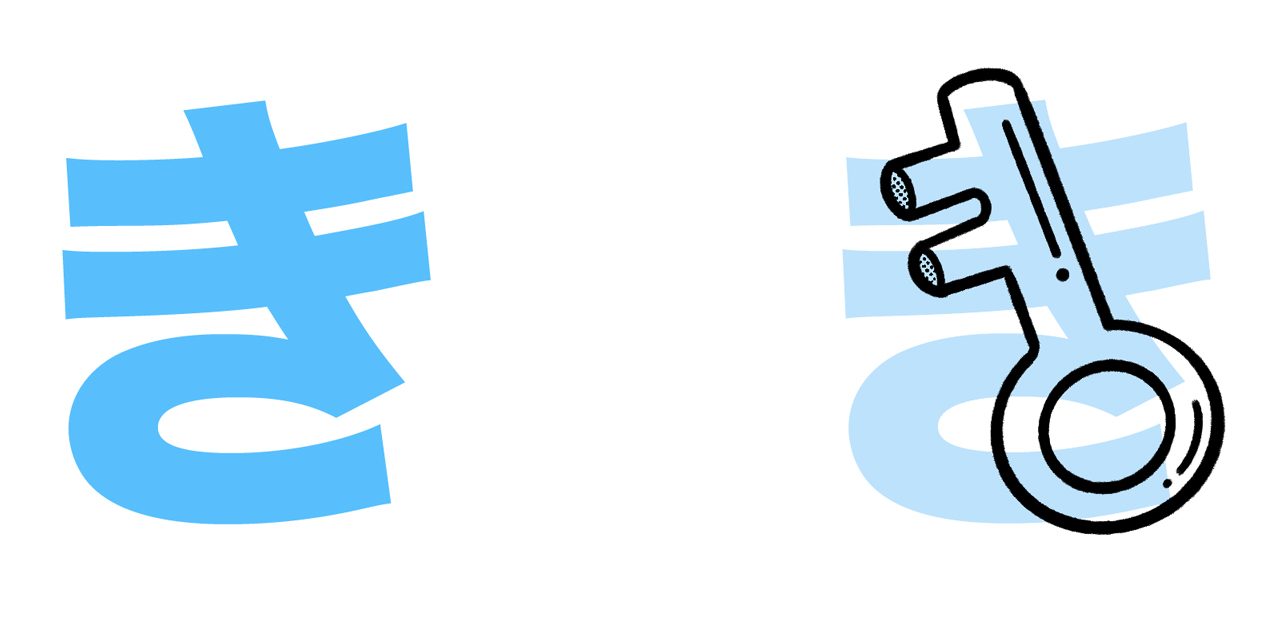
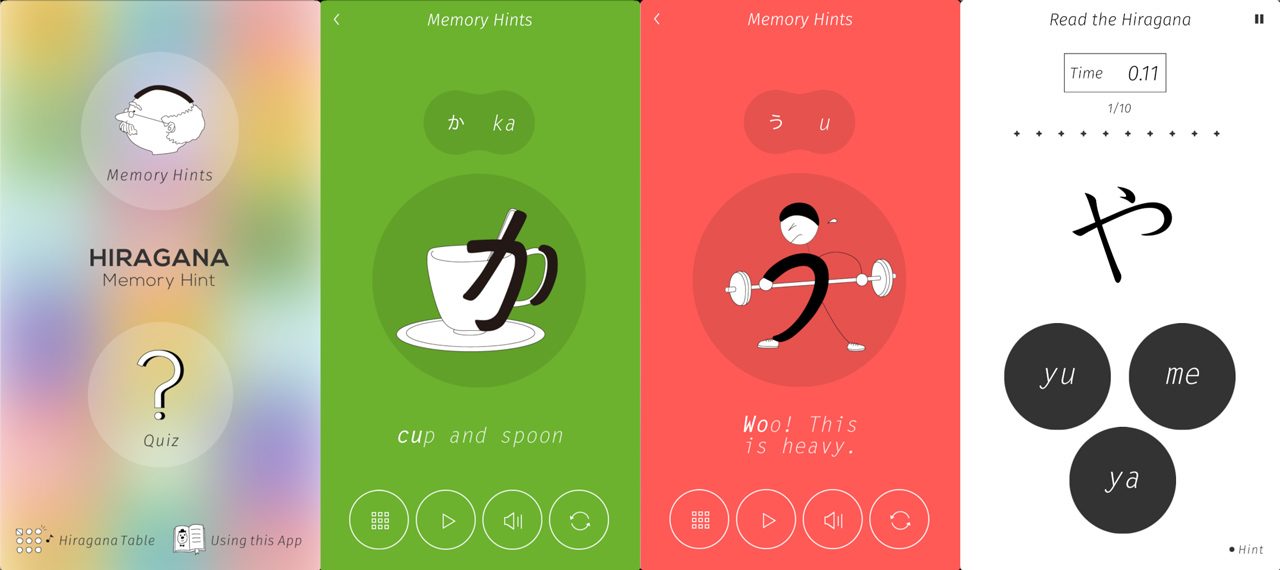
Mnemonics turn a shape like き into a key, and suddenly the reading "ki" is easy to recall. Tofugu, the Japanese-learning site, builds its system around this: the hiragana い is drawn to look like two eels, and the sound is "eel"—exactly the vowel it carries. The mnemonic and the pronunciation share the same English word, so you're not juggling two associations. The Japan Foundation's free Memory Hint apps take a similar approach, but the artwork often strays from the official character shape. Their apps include a fade animation that pulls the illustration back to reveal the real character, so you can see where the mnemonic ends and the kana begins. Dr. Moku, another mnemonic app, uses pop-culture references—Mr. T and Ed Sheeran make cameos—which works only if those references land for you.
Read First, Write Later
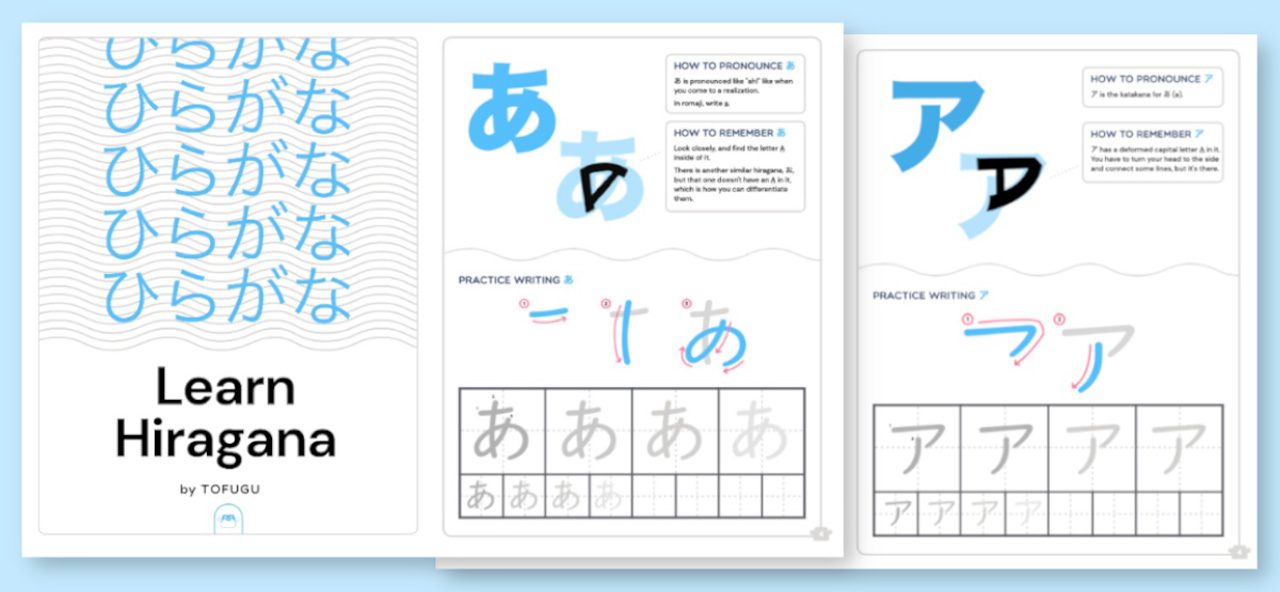
Handwriting a character from memory is a satisfying skill, but it's not the skill you need first. The most common form of writing now is typing, and on a Japanese keyboard you only need to read kana to select them from the conversion suggestions. Many kana workbooks include handwriting practice, but the priority should be on reading drills that ask you to turn kana into romaji. Audio for each character is often available in digital formats. Writing practice is still useful as a way to observe the shapes closely, but it should not gate your progress. The goal is to read a word like こんにちは and hear the greeting in your head, not to reproduce it on paper from memory.
Free Resources That Do the Heavy Lifting
Three free options cover most learners. Tofugu's Learn Hiragana and Learn Katakana books deliver the full 92 characters with mnemonics, writing sheets, and reading practice in PDF form; the companion web pages include audio. The Japan Foundation's Memory Hint apps, developed by the Japanese-Language Institute in Kansai, are free on iOS and Android, with multiple-choice quizzes plus a "Listen & Choose" mode. As of February 2023, audio playback was broken on an iPhone 13 mini—a real limitation for listening practice. JapanesePod101.com hosts a pair of YouTube videos that each run an hour, walking through the whole set with native speaker Risa demonstrating pronunciation. The videos have no timestamps, so finding a specific character means scrubbing. A ten-day playlist splits the hour into short chunks, but opens with more promotional content. One warning: the videos pair あ with "apple," but the actual sound is closer to "ah" (ɑ) than the "æ" in apple—listen to Risa, not the keyword.
Typing Your Way to Recall
Tofugu's Learn Kana Quiz is a browser-based drill that tests the one thing multiple-choice questions cannot: your ability to produce the reading from memory. You select which kana to practice by column—groups of three to five characters—or check every column at once. During a session you type the romaji reading for each character shown. Skip the ones that don't come to mind, and the quiz loops back to them. When you finish, the results show how many failed attempts each character caused, so you know exactly which shapes still need work. The quiz deliberately never reveals the correct answer when you miss; you have to recall it yourself, which is the point. This is a stricter test than the Memory Hint apps' multiple-choice format, but that's why it's worth doing.
Keep reading
Languages
Three Scripts, One Language: How Japan's Writing System Really Works
A guide to the origins, differences, and practical uses of hiragana, katakana, and kanji for learners.
Languages
Why 'McDonald's' Becomes Five Syllables: The Hidden Rules of Japan's Loanword Machine
A deep dive into katakanization—the three phonological rules that transform English into Japanese, and why your perfectly pronounced American English might leave Tokyo baristas staring blankly.