Three Scripts, One Language: How Japan's Writing System Really Works
A guide to the origins, differences, and practical uses of hiragana, katakana, and kanji for learners.
By Brainova
Why does Japanese need three writing systems?
Japanese needs three writing systems due to historical and linguistic factors. Kanji arrived from China over a thousand years ago, but Chinese and Japanese grammar differ significantly. Kanji convey meanings, yet Japanese verbs inflect for tense—like 笑います for 'laugh' and 笑っていました for 'laughing'—which Chinese verbs don't do. To write such inflections, hiragana and katakana originated from simplified kanji known as man'yōgana, evolving to represent sounds phonetically. Hiragana characters, with round, bubbly shapes, each typically encode a consonant-vowel pair, such as ひ for 'hi,' and are used for grammatical elements like particles and verb endings, as in common phrases こんにちは. Katakana, featuring sharp, angular lines, transcribe foreign loanwords like パン for 'bread' and foreign names such as ピッツバーグ for Pittsburgh. In practice, Japanese text blends these systems: kanji for core meanings, hiragana for grammar, and katakana for foreign terms. A reader must recognize all three to comprehend sentences fully, practicing by engaging with resources like manga, signs, and language apps to build familiarity.
What's the difference between hiragana and katakana?
Hiragana and katakana are both phonetic scripts essential to Japanese, but they serve distinct purposes and have different visual characteristics. Hiragana, derived from cursive man'yōgana, features soft, rounded characters; each symbol represents a syllable, like か for 'ka,' and is used for native grammar elements such as particles and verb endings, as well as common words like かわいい for 'cute.' Katakana, originating from angular fragments of kanji, has sharp lines and primarily transcribes foreign loanwords—examples include パン from Portuguese pão for 'bread' and ピッツバーグ for Pittsburgh. Beyond loanwords, katakana marks Japanese slang (マジ, 'for real'), company names (トヨタ), and names of less common plants and animals like サメ for 'shark,' where kanji are rare or complex. Readers discern these systems by shape and context: hiragana appears in grammatical structures, while katakana signals foreign influence or emphasis, akin to italics in English. Learning involves practicing writing characters, using apps with kana tabs, and reading diverse materials like song lyrics or product packaging to reinforce recognition.
How did hiragana and katakana originate?
Hiragana and katakana originated from man'yōgana, kanji characters adapted to represent Japanese sounds, a process that began over a thousand years ago when Japan borrowed Chinese writing. Hiragana emerged from cursive simplifications of full kanji; for example, あ derives from the cursive form of 安, い from 以, and so on, resulting in fluid, rounded shapes. Katakana, in contrast, was formed by extracting fragments or strokes from kanji—like ア from the left side of 阿—yielding angular, sharp-edged characters. This evolution directly addressed the mismatch between Chinese kanji and Japanese grammar, as verbs and particles required sound-based symbols for endings. Today, readers see these origins reflected in the characters' forms, with hiragana used for grammatical elements and katakana for foreign words. Learning their history helps understand why both systems coexist, and practice involves tracing character roots through resources like Duolingo's kana tabs or handwritten exercises.
What are effective ways to practice Japanese writing systems?
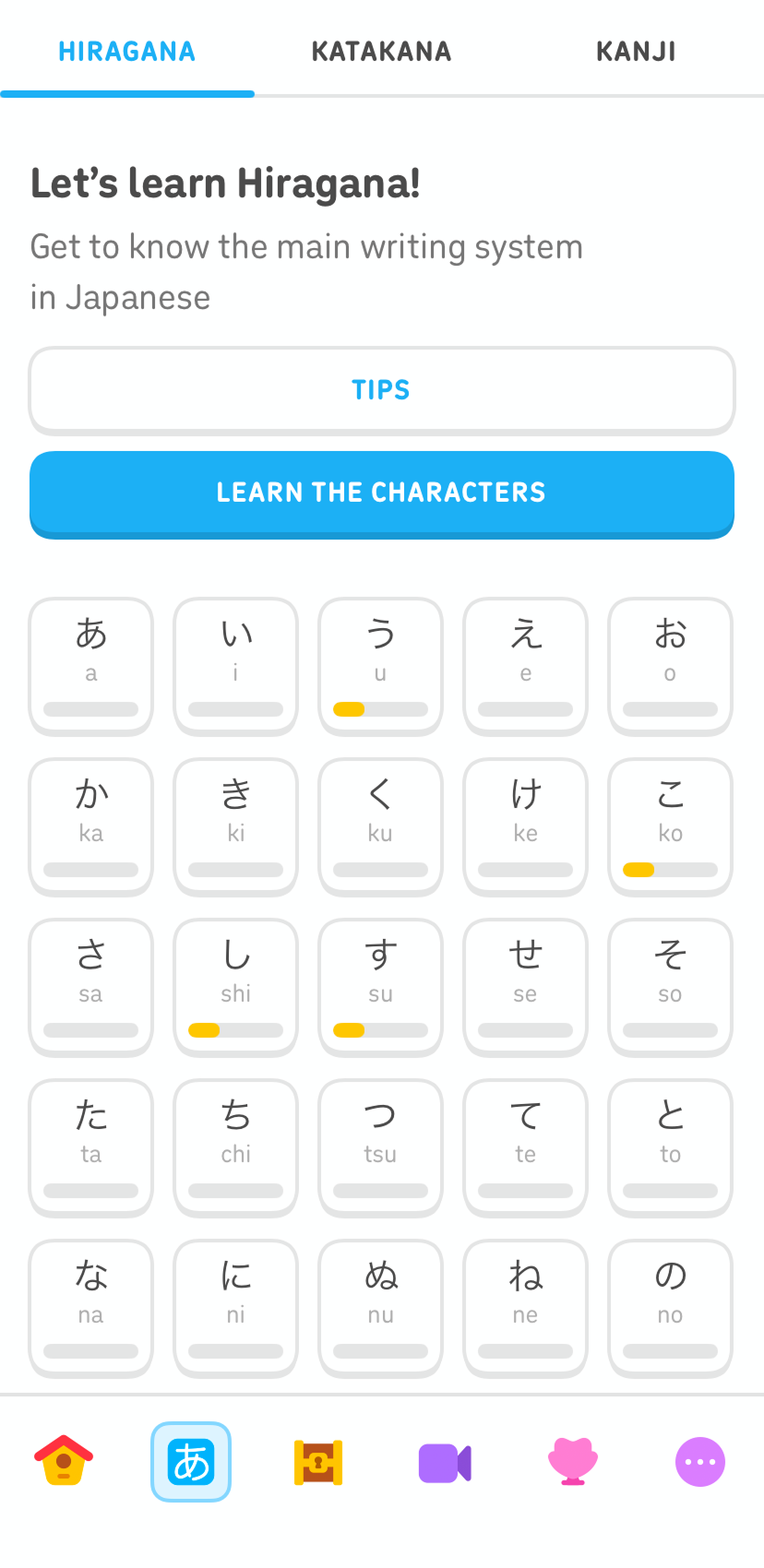
Effective practice for Japanese writing systems involves multiple approaches to build recognition and fluency. Start by writing characters on paper; for example, copy hiragana and katakana charts or jot down new kanji encountered in lessons. Duolingo's dedicated kana tab provides interactive exercises that pair characters with sounds, offering handwriting practice even after gilding all characters. For an extra challenge, turn off romaji in settings to force reliance on kana. Immerse yourself in real-world contexts: follow along with Japanese song lyrics on YouTube, read packaging at Asian supermarkets for words like エレベーター for 'elevator,' or explore Japanese streets via Google Street View to spot signs. For kanji, begin with common characters such as 山 for 'mountain,' writing them with meanings and readings, and use furigana guides when available. Additional methods include turning on Japanese subtitles for favorite anime or dramas, and practicing reading manga to see all three systems in action.
How does Duolingo teach the Japanese writing systems?
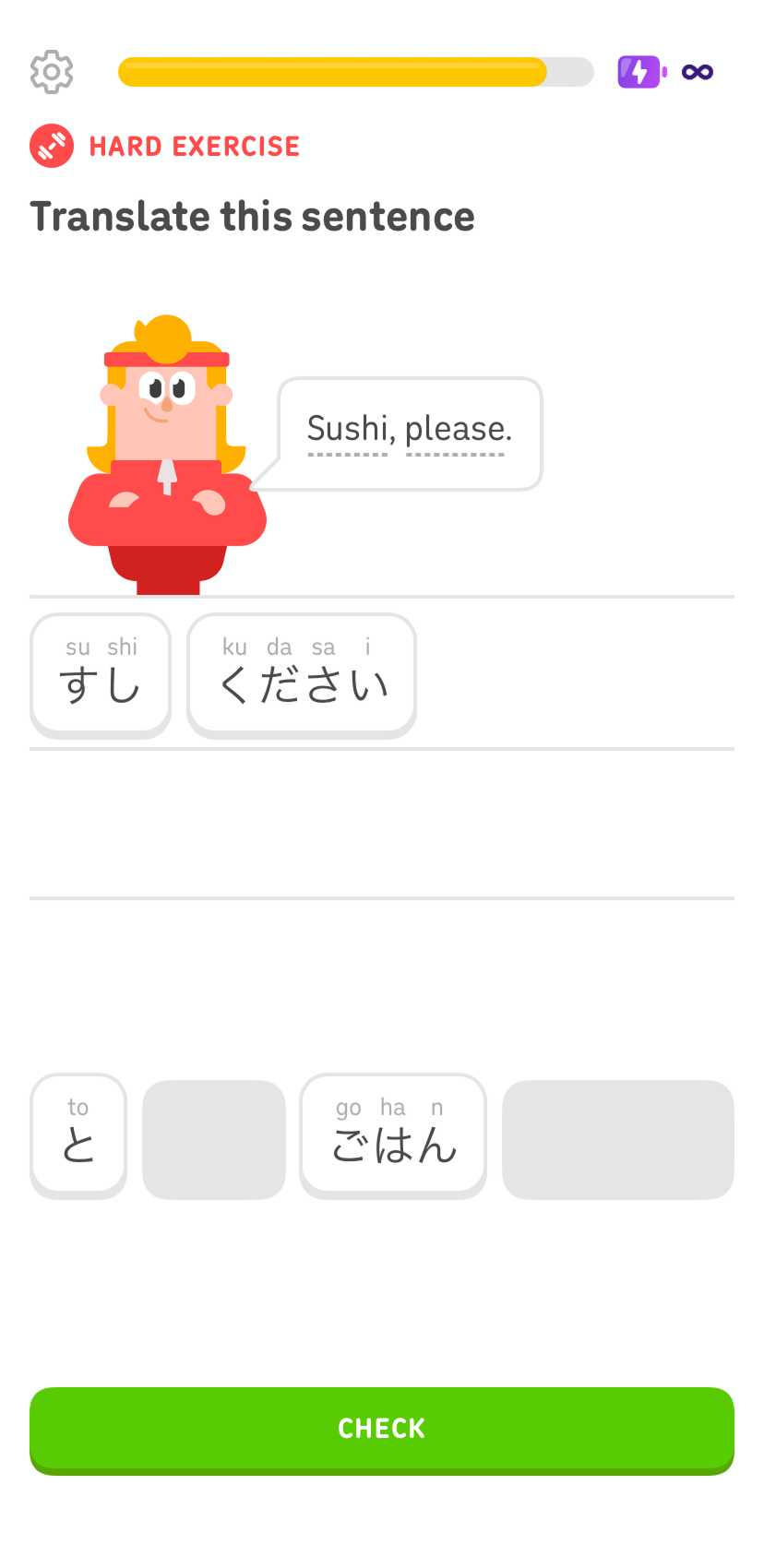
Learners typically start with romaji, the Roman-alphabet representation of pronunciation, to grasp basic words and phrases without knowing all kana. Hiragana and katakana appear in exercises from the very first lesson, and dedicated tabs provide charts linking every symbol to its sound, with exercises that encourage handwriting on-screen to solidify recognition. After gilding all characters, learners retain access to these tabs and encounter increasingly challenging drills. Kanji are introduced after kana proficiency develops; new characters like 笑 for 'laugh' receive focused drills at the start of each lesson before learners encounter them in full sentences. Small hiragana guides above kanji can be toggled on or off in settings, and turning off romaji adds an extra layer of difficulty as skills improve. Duolingo plans further kanji updates to expand coverage.
Keep reading
Languages
Why 'McDonald's' Becomes Five Syllables: The Hidden Rules of Japan's Loanword Machine
A deep dive into katakanization—the three phonological rules that transform English into Japanese, and why your perfectly pronounced American English might leave Tokyo baristas staring blankly.

Languages
How to Learn Hiragana and Katakana Without Hours of Copywork
Mnemonics and reading-first practice turn 92 unfamiliar shapes into a two-week win.